








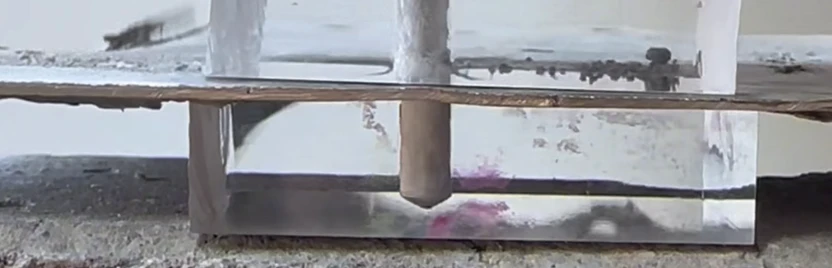
Multi-Purpose Drill Bits Need Speed - No Buts allowed
If your multi-purpose drill bit isn't cutting, the bit probably isn't the problem. Nine times out of ten, the drill is running too slow.
It's the most common mistake we hear about, and the fix takes about two seconds: turn the speed up. Here's why it works and how to do it right.
Why Your Multi-Purpose Bit Won't Cut
Most people learned to drill with a standard twist bit. Take it slow, ease into it, don't overheat anything. Then they chuck up a multi-purpose bit, run it the same way, and nothing happens.
Slowing down doesn't help here. It makes things worse. These bits are built differently, and they need to be run differently.
Why Speed Matters: The 118° Tip Explained
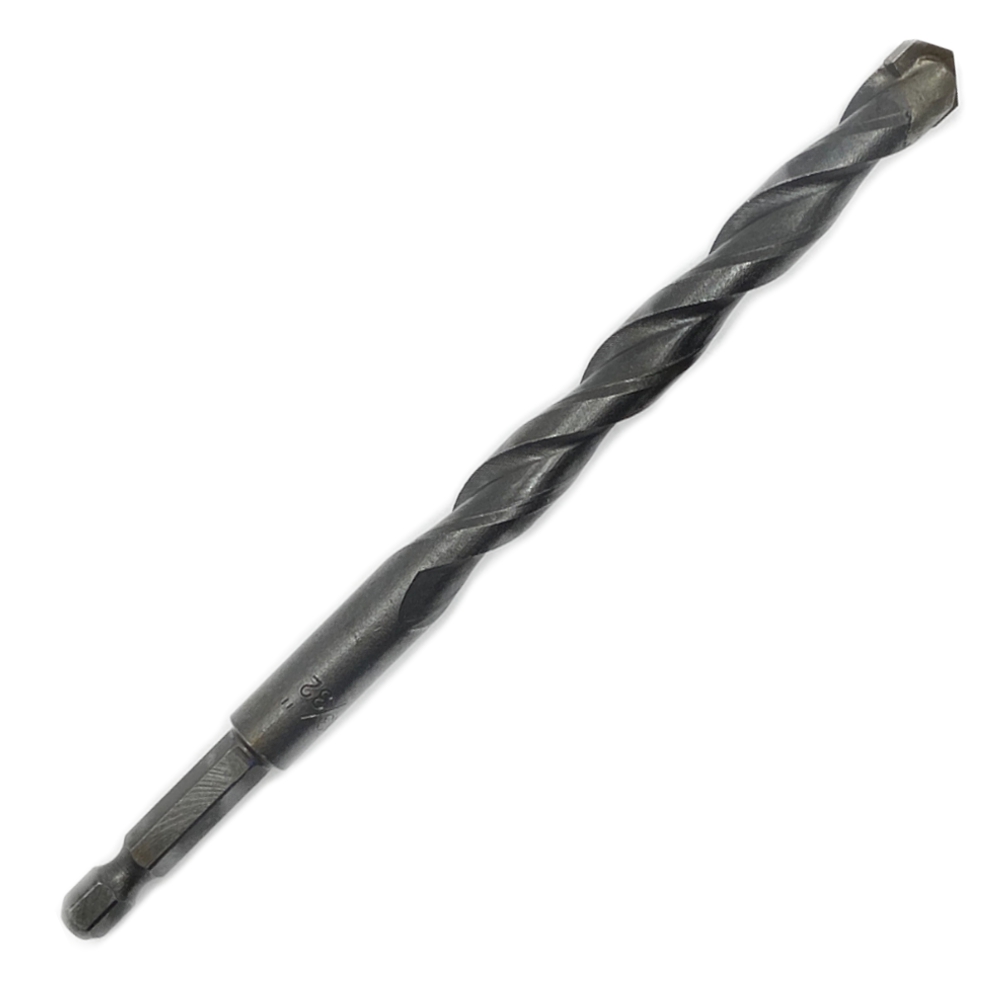
The tip of a Bad Dog multi-purpose bit is ground to 118°. That gives it a less aggressive cutting angle than a traditional bit, which means it drills slower at the same RPM. The bit works more like a file than a blade.
The answer is speed. The faster you spin it, the faster it cuts. Spin it slow and the tip never gets enough speed at the cutting surface to do its job. Run it fast and the bit does the cutting for you.
The tip itself is Carboloid: carbide, titanium, and cobalt, high-temperature brazed to an armored steel shank. Regular bits don't use that combination. That's what lets a multi-purpose bit go through materials that stop a standard bit cold, including hardened steel, as long as you give it the RPM it was built for.
How to Drill With Multi-Purpose Bits
- Set your drill to high speed. For most materials, run at 2,500 RPM or above.
- Mark your spot and set the bit's tip on it.
- Let the speed do the work. Don't lean on the drill. The bit cuts because it's spinning fast, not because you're pushing hard.
- Keep it spinning. If it's not cutting, go faster, not slower.
- Slow down only for glass and porcelain tile. Those are the exceptions (more below).
Quick Reference
- Speed: 2,500 RPM or above for most materials
- Tip angle: 118° (drills slower than a traditional bit, so speed is what makes it cut)
- Fast: hardened steel, metals, wood, plastic, ceramic tile
- Slow: glass and porcelain tile only
Materials: When to Go Fast, When to Slow Down
Go fast (2,500 RPM or above): hardened steel, other metals, wood, plastics, and ceramic tile. If it's not on the slow list, spin it fast.
Slow down: glass and porcelain tile. These are the only two. For these, back the speed off rather than running at full RPM.
That's the whole rule. Speed is your friend on almost everything, and you ease off on glass and porcelain.
Built the Way We've Built Bits Since 1988
Bad Dog Tools has been making drill bits in Bristol, Rhode Island since 1988. We're family-owned, every bit is made in the USA, and we've produced more than six million of them. Every bit carries a lifetime guarantee. If it fails, we repair or replace it.
If you've been fighting a multi-purpose bit, give speed a try before you give up on it.
Ready to drill faster?
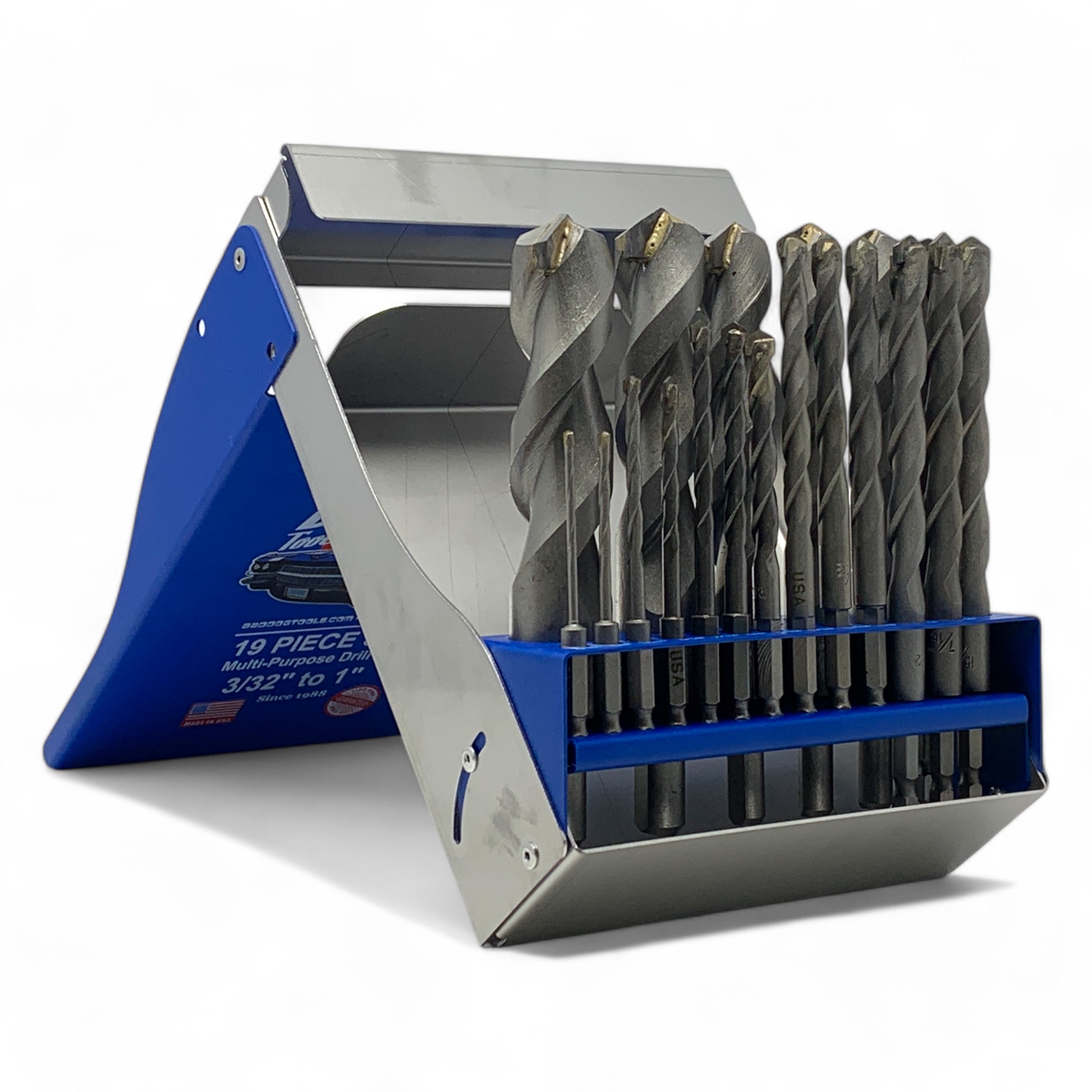
Get the Multi-Purpose Bit 14-Piece Set, backed by our lifetime guarantee.
Shop the Multi-Purpose Bit 14-Piece SetQuestions? Call 800-252-1330
FAQ
Why won't my multi-purpose drill bit cut?
You're most likely running the drill too slow. The 118° tip drills slower than a traditional bit, so it needs high speed to cut. Turn the speed up to 2,500 RPM or above.
What RPM should I use with multi-purpose drill bits?
For most materials, run at 2,500 RPM or above. The faster you spin the bit, the better it drills. The exceptions are glass and porcelain tile, which need a slower speed.
Can multi-purpose drill bits drill hardened steel?
Yes. Hardened steel is one of the materials these bits are made to drill. Use high speed and let the Carboloid tip do the cutting.
Can I drill tile with a multi-purpose bit?
Yes, ceramic tile is fine at full speed. Glass and porcelain tile are the exceptions, so slow down for those.
Does pushing harder help?
No. Speed does the cutting, not pressure. If the bit isn't cutting, go faster rather than pushing harder.
Written by Joseph Strong on 7th Oct 2026 I’m JJ Strong, a mechanical engineer and third-generation tool designer at Bad Dog Tools, our American-made, family-run company built on durability and innovation. I grew up hauling booths and talking tools at trade shows before I could even drive. Now I design and build and improve our next generation of lifetime-guaranteed tools - our custom induction brazing system to our precision sharpening technology. On weekends, you’ll find me restoring my ’86 Land Rover Defender or ’54 Jaguar XK120 and seeing just how much I can build (or break) with Bad Dog Tools.