








The Forstner Bit Set That Drills Around Corners
Most drill bits only know one direction: straight ahead. That works fine until you're trying to run conduit through a stud with access on one side, cut a quick mortise without a router setup, or drill a clean flat-bottom hole somewhere a standard bit can't reach. That's where the Bad Dog Rover Bit Set A earns its keep.
It's a Forstner bit, but not like any you've used before.
Why Standard Forstner and Spade Bits Fall Short
Forstner bits drill clean. Spade bits drill fast. But neither one lets you change direction once you're in the material, and neither one gives you both speed and a clean hole at the same time.
If you've ever tried to run wire or conduit through a stud bay with limited access, you know what happens. You can't get your drill square to the material, you end up with a blown-out ugly hole, or you're stuck drilling from both sides and hoping they line up. Standard bits weren't built for that problem.
The Rover Bit was.
What Makes the Rover Bit Different
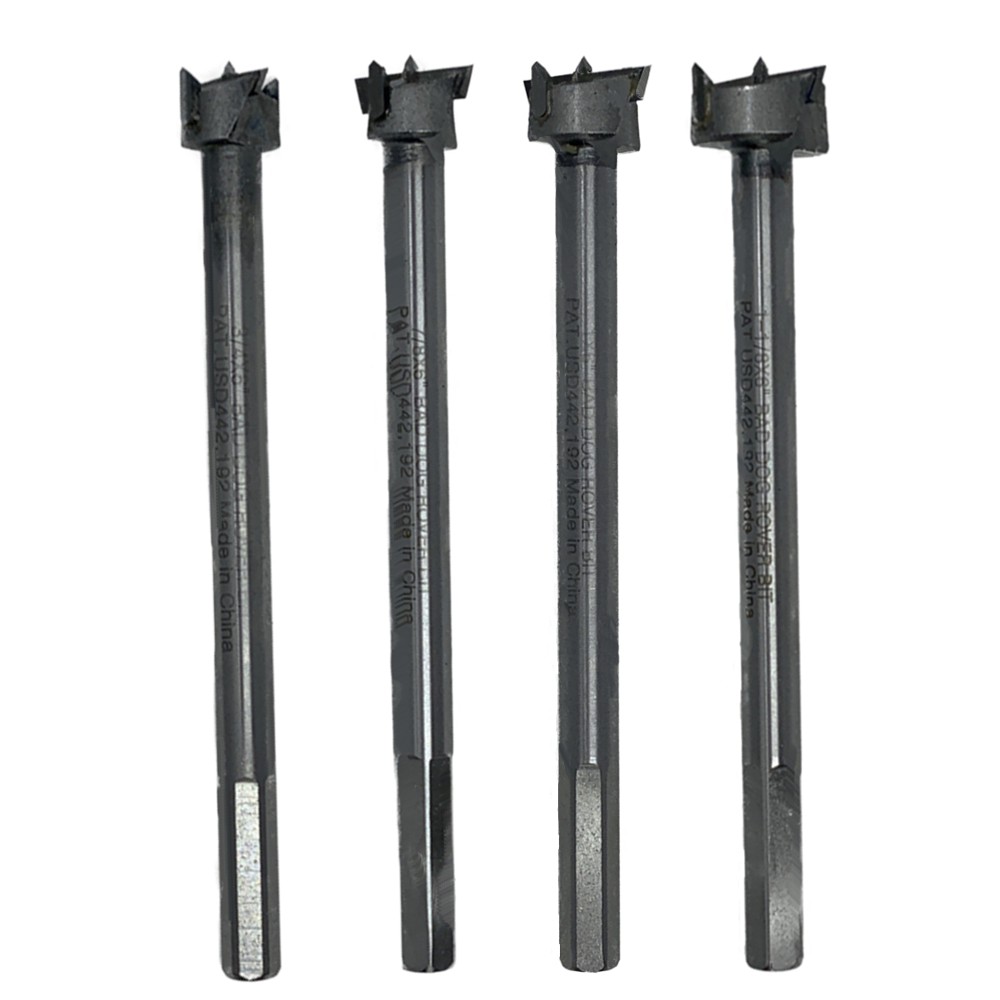
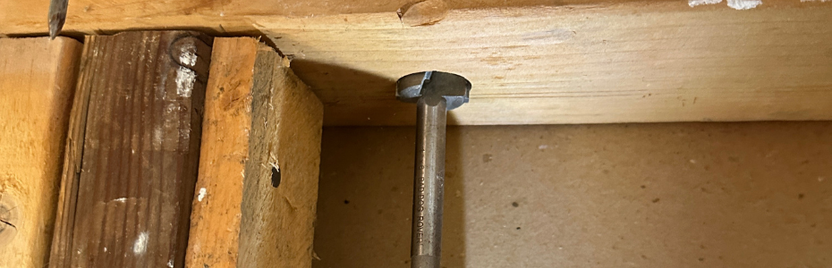
The Bad Dog Rover Bit is a modified Forstner bit with patented side cutters built into the edges. That means once the center brad point sets in the material, you can tilt the drill and the side cutters take over, letting you literally change direction while you're drilling. You can bore around a corner, cut sideways for a quick mortise, or drive through a stud from a single access point.
The cutting speed matches a spade bit. The hole quality matches a Forstner. You're not choosing one or the other.
The tips use the same carbide, cobalt, and titanium blend as Bad Dog's multipurpose drill bits, which means they'll survive most nail encounters in framing lumber, not just quit on you the moment steel shows up.
What You Can Drill with Rover Bits
Rover Bits are built for soft materials. Here's what they handle cleanly:
| Material | Notes | Speed (RPM) |
|---|---|---|
| Wood (hard & soft) | Clean flat-bottom holes, no tearout | 400–2,500 |
| Plastics / PVC | Composite decking, PVC board | 400–1,500 |
| Fiberglass | Minimal blowout; always wear a mask | 400–1,500 |
| Corian / Solid Surface | Ideal for sink cutouts and hardware installs | 800–1,000 |
| Carbon Fiber | Cleaner holes than standard paddle or Forstner | 400–1,000 |
| Melamine | Side cutters cut surface coating cleanly | 400–2,500 |
What they won't drill: metal, tile, or stone. The tips are too aggressive for hard materials and will fracture. If you hit a nail mid-cut, the bit can usually push through, but avoid it when you can and never start on top of one.
Tips for Getting the Most Out of Your Rover Bit
Always set the center point before tilting. Start square, let the brad point grab, then change direction. If the side cutters hit the surface first, the bit will walk.
Match your speed to your pressure. Push harder when drilling fast to prevent burning. At lower speeds, ease off the pressure to prevent binding.
Drilling near nails? Spin at least 2,000 RPM. Don't start on top of one, and don't change direction mid-cut if you hit steel.
Never drill toward yourself when boring around corners. The bit will let you know it's dull by cutting slowly and burning — that's covered under your lifetime guarantee.
Rover Bit Set A — What's in the Box
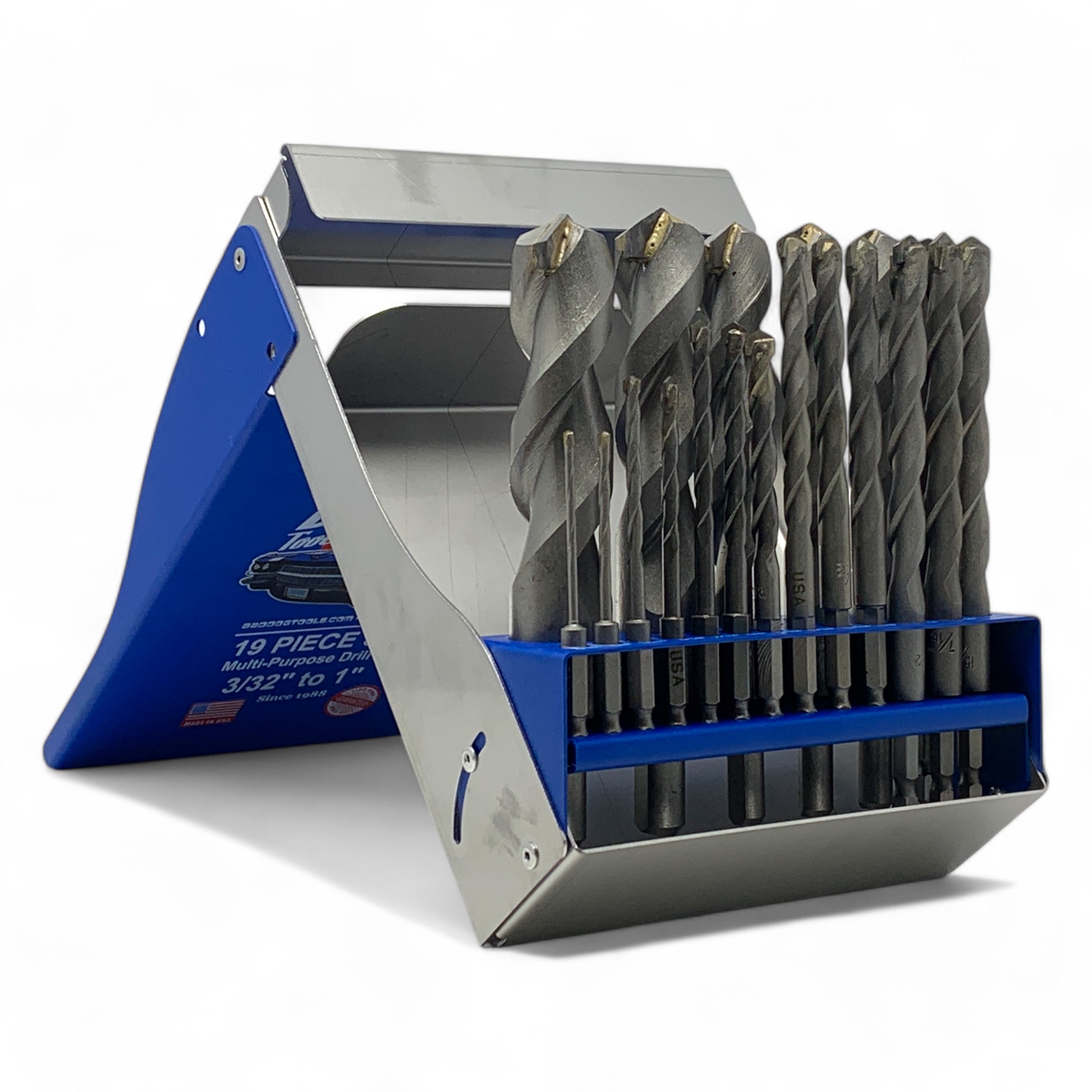
Set A comes with five bits (¼" through ¾"), all 6" long, packed in a metal storage case. Sized for the DIYer and hobby craftsperson who wants a capable set without buying sizes they'll never use. Need bigger holes? Set B covers 7/8" through 1⅛", and individual bits are available if you only need one size.
Power source: ½" or ⅜" electric hand drill. The hex shank keeps it from spinning in the chuck. Compatible with any standard drill. No special chuck needed.
Rover Bit Set A — 5 Bits + Metal Case
¼" · ⅜" · ½" · ⅝" · ¾" | All 6" long | Hex shank | Lifetime Guarantee
GET THE SET — $179.95Free shipping over $50 · 60-day money-back guarantee · Made in USA since 1988
Frequently Asked Questions
Can the Rover Bit really drill around corners?
Yes, that's its purpose. The patented side cutters let you tilt the bit and change direction once the center point is set in the material. It's particularly useful for running conduit through studs from one side, or cutting mortises without a router.
What's the difference between the Rover Bit and a standard Forstner bit?
A standard Forstner only cuts forward. The Rover Bit adds side cutters to the rim, letting it cut laterally as well. It also cuts faster, closer to spade bit speed, while still producing the flat-bottom clean holes Forstner bits are known for.
What materials can I use the Rover Bit on?
Wood (hard and soft), plastics and PVC, fiberglass, Corian and solid surface, carbon fiber, and melamine. It's not designed for metal, tile, or stone.
What drill do I need?
Any ½" or ⅜" electric hand drill. The hex shank seats firmly and won't slip in the chuck.
Is there a larger set?
Yes, Set B covers 7/8", 1", and 1⅛" for bigger through-holes. Individual bits are also available if you just need a specific size.
Bad Dog Tools · 24 Broadcommon Rd, Bristol, RI 02809 · 800-252-1330 · topdog@baddogtools.com
Written by Joseph Strong on 10th Jun 2026 I’m JJ Strong, a mechanical engineer and third-generation tool designer at Bad Dog Tools, our American-made, family-run company built on durability and innovation. I grew up hauling booths and talking tools at trade shows before I could even drive. Now I design and build and improve our next generation of lifetime-guaranteed tools - our custom induction brazing system to our precision sharpening technology. On weekends, you’ll find me restoring my ’86 Land Rover Defender or ’54 Jaguar XK120 and seeing just how much I can build (or break) with Bad Dog Tools.