








How to Drill Out a Broken Tap — And Why Your Cobalt Bits Won't Cut It
If you've ever snapped a tap off flush in a workpiece, you already know what comes next: that sinking feeling, the ruined part, the wasted hour. A broken tap is one of the most frustrating problems in any machine shop or fab operation. Not because it's uncommon, but because fixing it with the wrong tool makes everything worse.
Here's what you need to know to get that tap out cleanly, and why the bit you reach for makes all the difference.
Why a Broken Tap Is So Hard to Remove
The problem comes down to material hardness. Taps, whether high-speed steel or cobalt, are hardened tools. They have to be, or they'd never cut threads in the first place.
Standard cobalt drill bits are made from essentially the same class of material as the tap itself. So when you put a cobalt bit on a broken tap in the drill press and push down, nothing happens. Not a scratch. The bit deflects, skates around, and accomplishes nothing, no matter how much pressure you apply. You're asking one hardened tool to cut another hardened tool of equal or greater hardness. Physics says no.
Tap extractors can work in some situations, but if the tap is flush, shattered, or wedged tight, you're out of options with standard tooling. What you actually need is something harder than the tap.
What Makes the Bad Dog Carboloid Tip Different
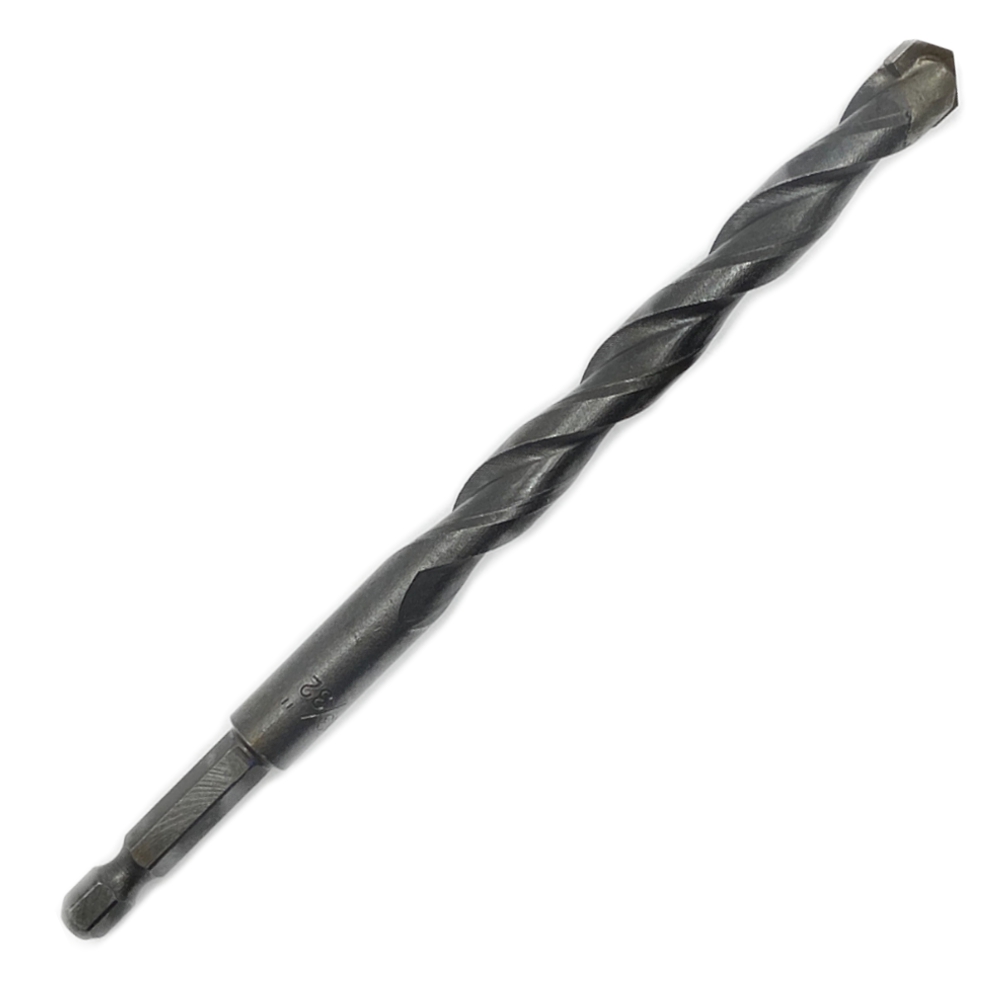
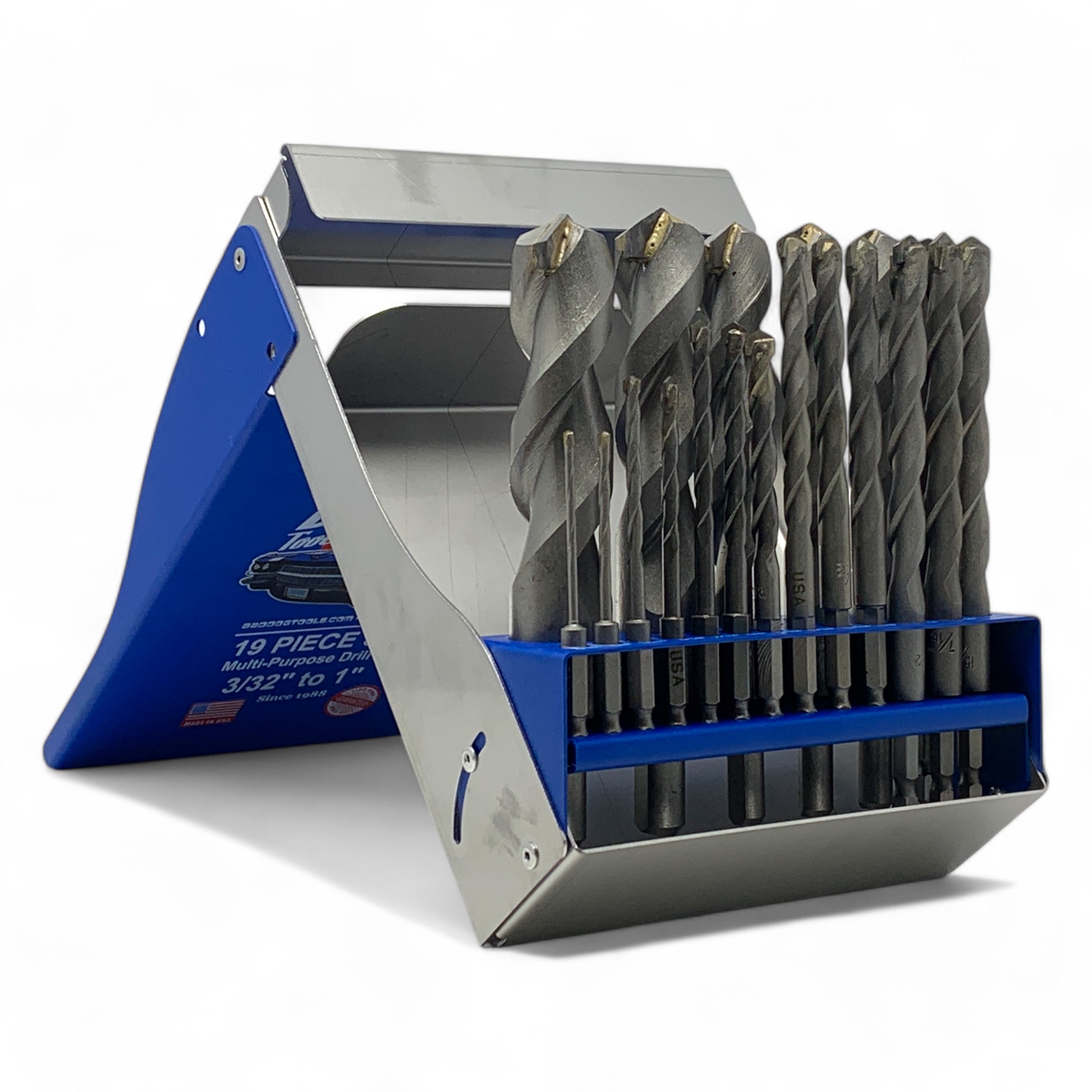
Bad Dog Multi-Purpose Drill Bits use a proprietary Carboloid tip. This is a blend of carbide, titanium, and cobalt that is high-temperature brazed directly onto an armored steel shank.
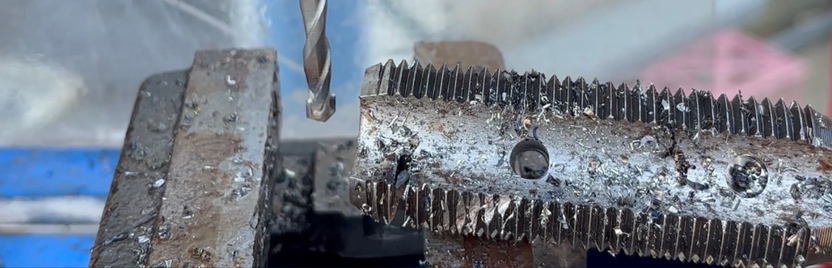
That combination puts the cutting tip in a different hardness category than a standard tap. Where a cobalt bit meets a broken tap and quits, the Carboloid tip bites in immediately. In a drill press, you'll see metal spirals forming within seconds. Given a few minutes, the bit drills straight through.
The Carboloid tip also handles the heat that builds up drilling hardened material. The high-temp brazing process that bonds the tip to the shank isn't cosmetic. It's what keeps the tip from separating under the thermal stress of drilling something this hard.
How to Drill Out a Broken Tap: Step by Step
What you'll need:
- Bad Dog Multi-Purpose Drill Bit (sized to match or slightly smaller than your tap's minor diameter)
- Drill press (strongly preferred over handheld)
- Cutting fluid or oil
- Center punch
- Center punch the broken tap. Even if it's flush, get a punch mark as centered as possible. This keeps the bit from walking.
- Set up in the drill press. Handheld drilling on hardened material gives you poor control and risks breaking the bit. Use a press.
- Apply cutting fluid. A drop of oil at the start and periodically through the operation keeps heat manageable.
- Start drilling at moderate speed. Bad Dog bits have a Carboloid tip that needs good tip speed. Don't creep along. Let the bit do the work with steady, consistent pressure.
- Watch for spirals. Within the first pass, you should see metal curling off the tap. That's confirmation you're cutting, not skating.
- Drill through completely. Once the tap core is removed, the remaining threads can often be cleaned up with a tap of the same size, or you can re-tap to the next size up.
Quick Reference
| Bit type: | Bad Dog Multi-Purpose (Carboloid tip) |
| Setup: | Drill press recommended |
| Lubrication: | Yes — cutting fluid or oil |
| Speed: | Moderate to moderate-high — don't run too slow |
| Signs it's working: | Metal spirals visible within first few seconds |
Other Places the Multi-Purpose Bits Shine
Broken tap removal is where these bits prove themselves most dramatically, but the same hardness that handles taps also makes them useful for:
- Hardened bolts and studs that standard bits skate off
- Stainless steel and other tough alloys
- General-purpose drilling where you're moving between material types and don't want to swap bits
One bit, a lot of coverage.
Done fighting broken taps?
Made in USA · Making drill bits since 1988 · Over 6 million produced · Lifetime guarantee
Get the Bad Dog Multi-Purpose Bits →800-252-1330 · Repair or replace, no questions asked
Frequently Asked Questions
Can I use a regular cobalt bit to drill out a broken tap?
No. Standard cobalt bits are made from the same class of hardened material as the tap itself. Putting a cobalt bit against a broken tap in a drill press produces no progress — the bit deflects rather than cuts. You need a bit with a harder cutting tip, like the Bad Dog Carboloid.
What size bit should I use to drill out a broken tap?
Start with a bit sized at or slightly smaller than the tap's minor diameter (the root of the threads). This removes the tap core while leaving as much of the threaded hole intact as possible for cleanup or re-tapping.
Do I need a drill press, or can I use a handheld drill?
A drill press is strongly recommended. Drilling hardened material requires consistent, centered pressure. A handheld drill makes it easy to walk off-center, which can damage the surrounding threads or break the bit.
Will this work on any broken tap, or just certain types?
The Bad Dog Multi-Purpose Bit handles both high-speed steel and cobalt taps. If the tap is flush or shattered flush with the surface, center punch it first to give the bit a starting point.
What is a Carboloid tip?
Carboloid is Bad Dog's proprietary tip material — a blend of carbide, titanium, and cobalt, high-temp brazed onto an armored steel shank. The combination produces a cutting edge harder than standard tap materials, which is why it can drill through what cobalt bits can't.
Written by Joseph Strong on 3rd Jun 2026 I’m JJ Strong, a mechanical engineer and third-generation tool designer at Bad Dog Tools, our American-made, family-run company built on durability and innovation. I grew up hauling booths and talking tools at trade shows before I could even drive. Now I design and build and improve our next generation of lifetime-guaranteed tools - our custom induction brazing system to our precision sharpening technology. On weekends, you’ll find me restoring my ’86 Land Rover Defender or ’54 Jaguar XK120 and seeing just how much I can build (or break) with Bad Dog Tools.