








Drill Bit Speed: Why Your Bits Aren't Drilling
Drill Bit Speed: Why Your Bits Aren't Drilling (And the Easy Fix)
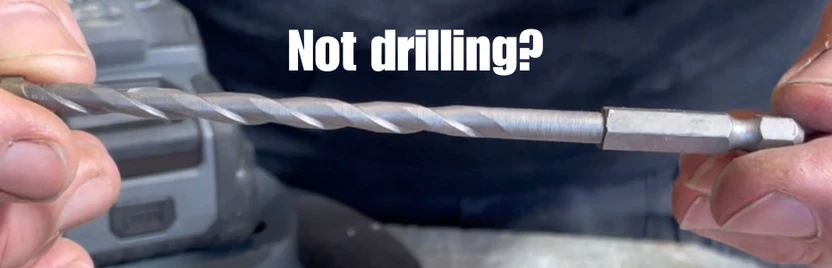
If your drill bits don't seem to be cutting, the problem probably isn't the bit — it's your drill speed. This is the single most common question we get at Bad Dog Tools, and 99% of the time the answer is the same: your drill is spinning too slowly.
Here's the good news. You don't need a new tool or a new technique. You just need to understand what RPM your bit needs — and match it. We'll walk you through exactly how to do that.
Why Bad Dog Bits Need More Speed
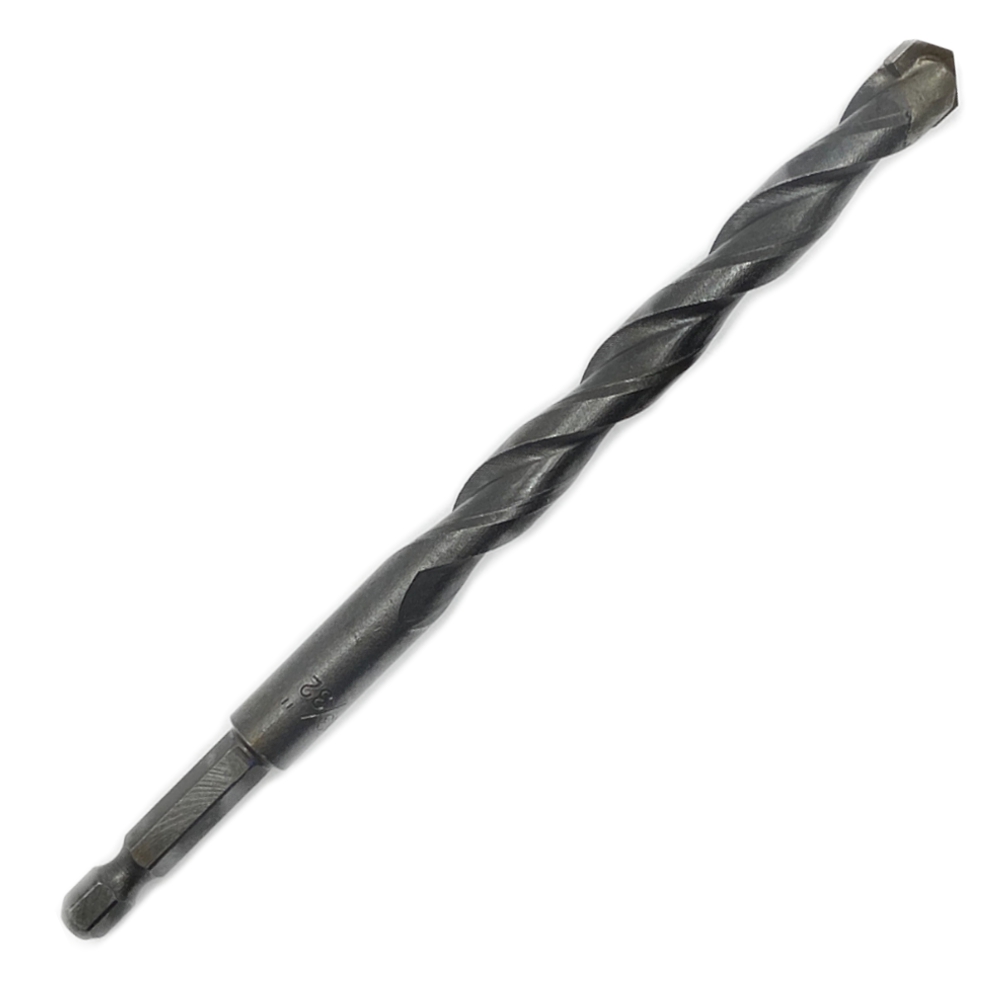
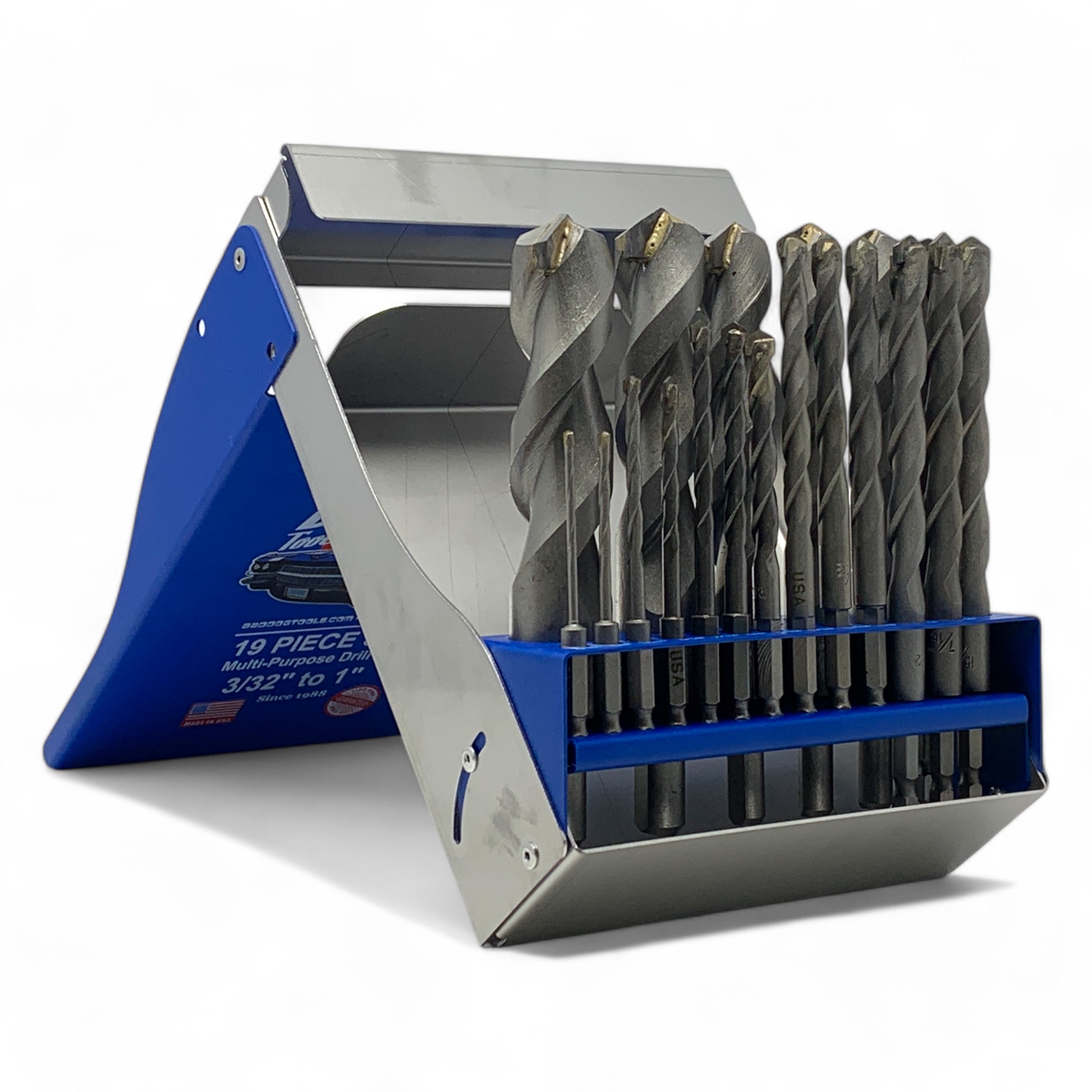
Bad Dog multipurpose bits are built differently than a standard twist drill. A conventional bit has an aggressive cutting angle that bites into material like a wedge. Bad Dog bits use a less aggressive cutting angle — they file through material rather than cut through it. That's what makes them so versatile across wood, metal, masonry, tile, glass, and more without swapping bits.
But that geometry has a tradeoff: to achieve the same effective cutting speed at the tip, the bit needs to spin faster. At low RPM, a less aggressive angle just rubs against the surface without making meaningful progress. Spin it fast enough and it files through cleanly and efficiently. That's the whole game.
What RPM Do Bad Dog Bits Need?
Bad Dog bits want to spin at a minimum of 2,500 RPM — and they love it even faster. Here's how common drills stack up:
| Drill Type | Typical RPM | Works well? |
|---|---|---|
| Standard drill/driver (low gear) | ~400 RPM | ✗ Too slow |
| Standard drill/driver (high gear) | ~1,500 RPM | ⚠ Marginal |
| Cordless Hammer Drill / Drill Press | ~2,000 RPM | ✓ Good |
| Impact Driver / Corded Drill | ~3,000+ RPM | ✓ Excellent |
How to Check Your Drill's RPM in 30 Seconds
- Find the label on the side or back of your drill body
- Look for the RPM spec — it may show a range or a single max number
- Compare to 2,500 RPM — below that, switch to high gear or use an impact driver
- Apply firm, steady downward pressure — speed and pressure work together
The Impact Driver Advantage
Impact drivers and corded drills spin fast — most in the 3,000+ RPM range — which puts them squarely in the sweet spot for Bad Dog bits. Bad Dog multipurpose bits are available with a ¼" hex shank specifically for impact drivers, so the fit is solid with no slipping.
If you've been using a standard drill on low gear and your bits feel sluggish, switching to high gear or an impact driver is often the only change you need.
Tool of choice: Impact driver or corded drill with ¼" hex shank bit
Soft metals (aluminum, brass): Use Bad Dog Wax to prevent binding
Keep Your Bits Sharp
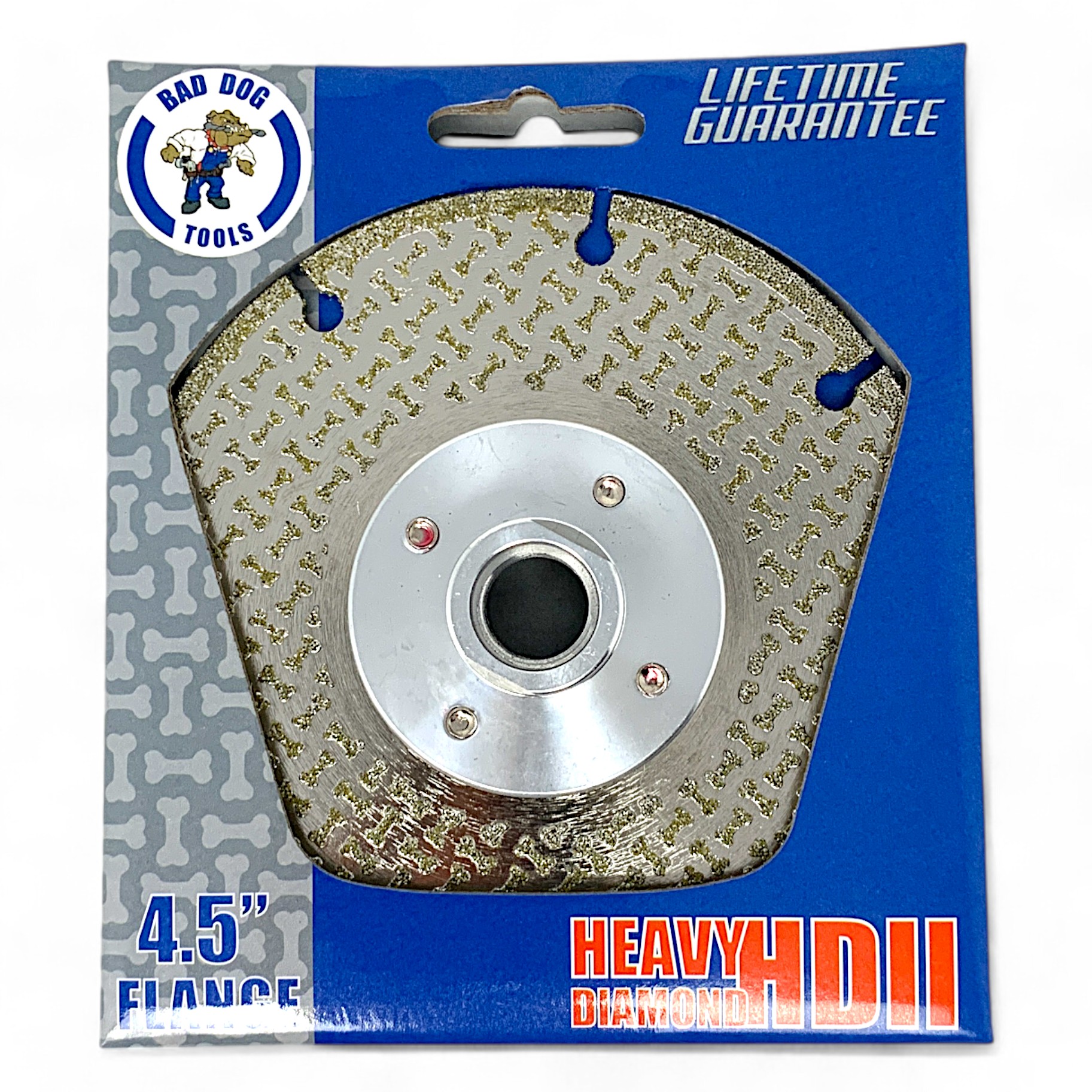
Bad Dog bits are backed by a lifetime guarantee — if yours ever dulls out, send it back and we'll sharpen or replace it. You can also extend bit life at home with the Bad Dog Diamond Sharpening Wheel.
Bad Dog multipurpose bits are made in the USA and have been since 1988. Built to handle wood, metal, masonry, tile, glass, and more — with a lifetime guarantee behind every one.
Shop Multipurpose Drill Bits →Questions? Call us: 800-252-1330 · topdog@baddogtools.com
Frequently Asked Questions
The most common cause is drill speed. Bad Dog bits use a less aggressive cutting angle that files through material rather than cuts — which means they need higher RPM to work effectively. Make sure you're at 2,500 RPM minimum; an impact driver or corded drill is usually the easiest way to get there.
Yes — Bad Dog multipurpose bits come with a ¼" hex shank designed specifically for impact drivers. Impact drivers typically spin at 3,000+ RPM, which is the ideal range for Bad Dog bits.
Check the spec label on the side of your drill body — it lists the RPM rating. If your drill tops out below 2,500 RPM, an impact driver or corded drill will give you significantly better results.
Yes. The Carboloid tip — carbide, titanium, and cobalt, high-temp brazed to an armored steel shank — handles wood, mild and hardened steel, stainless, masonry, ceramic tile, porcelain, glass, and more. Speed and steady pressure are the keys regardless of material.
First confirm your drill speed is at or above 2,500 RPM. If speed isn't the issue, the bit may need sharpening. Bad Dog bits carry a lifetime guarantee — send them in and we'll restore or replace them.
Written by Joseph Strong on 1st Apr 2026 I’m JJ Strong, a mechanical engineer and third-generation tool designer at Bad Dog Tools, our American-made, family-run company built on durability and innovation. I grew up hauling booths and talking tools at trade shows before I could even drive. Now I design and build and improve our next generation of lifetime-guaranteed tools - our custom induction brazing system to our precision sharpening technology. On weekends, you’ll find me restoring my ’86 Land Rover Defender or ’54 Jaguar XK120 and seeing just how much I can build (or break) with Bad Dog Tools.